
Maybe you’ve meant to start composting for years. Maybe you tried a backyard pile once and ended up with a soggy, smelly mess. Either way, here’s the good news: composting with us is less about getting it perfect and more about getting started. Here’s what the first few weeks actually look like.
Week one: it feels like a thing
For the first few days you’ll pause over the trash can. Does this go in the bucket? Mostly, yes. Our rule of thumb: if it was food, or could have been food, it can go in. That includes things backyard piles can’t handle, like meat, bones, dairy and that container of leftovers you forgot about. Not sure about something? Check the full list or print the fridge guide.
Week two: you find your setup
Most people land on a small container on the counter or a bag in the freezer, emptied into the bucket every day or two. Frozen scraps don’t smell and don’t draw fruit flies, which is why so many members swear by the freezer. A brown paper bag or a sheet of newspaper in the bottom of the bucket keeps things tidy.
Week three: you stop thinking about it
That’s the goal. Scraping a plate into the bucket becomes as automatic as tossing a can in the recycling. Your trash changes too: lighter bags, fewer trips to the curb, less smell. As one Curbside member wrote on Google, “My weekly trash bag is less than half as heavy now.”
The worries we hear most
“Won’t it smell?” Not much. The lid stays on, and Curbside buckets are swapped for a clean one every week. A layer of paper or leaves on top helps too.
“What about bugs?” Keep the lid closed, and in summer stash fruit peels in the freezer until pickup day.
“What if I put the wrong thing in?” One stray produce sticker won’t ruin anything. Plastic is the big one to skip, including “biodegradable” bags that aren’t certified, because our crew has to pull it out by hand.
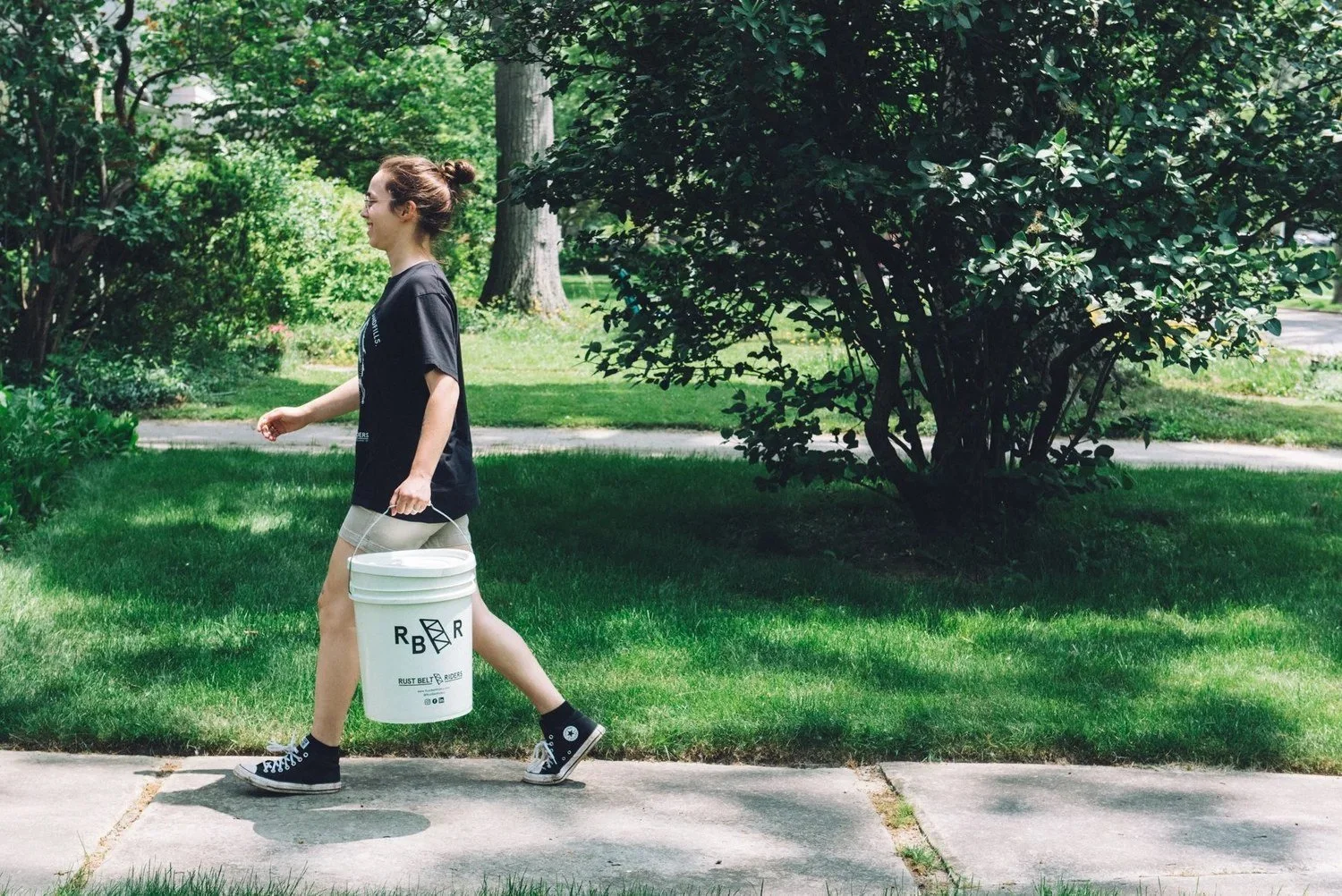
“I don’t have time.” Curbside members just set the bucket out on pickup day, and you don’t need to be home. Drop-Off members can use any of our 40+ bins, any time, with one code.
“Does my one bucket really matter?” Yes. Food is about a quarter of what goes into U.S. landfills, where it rots without oxygen and gives off methane. Every bucket you fill is food that becomes soil instead.
Make it yours
There’s no wrong way to start. Go monthly if you’re not sure. Pause when you travel. Add a second bucket for the holidays. Some communities, including Lorain County, even cover the cost for residents. Check the FAQ to see if yours does.
Ready for week one? Start Curbside Pickup or join Neighborhood Drop-Off.